
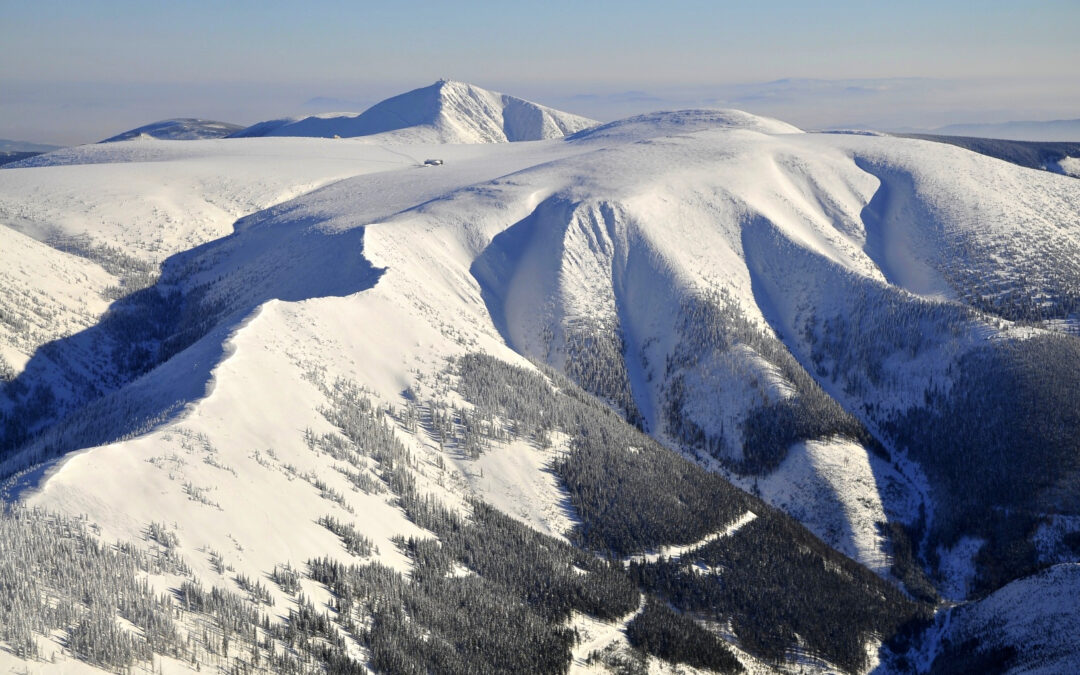
The Giant Mountains, also known as the Krkonoše, are a prominent mountain range located in the Czech Republic and Poland. These mountains are renowned for their stunning natural beauty and offer a wide range of activities throughout the year, including hiking, skiing, snowboarding, and sightseeing.
The highest peak in the Giant Mountains is Sněžka. It stands at 1,603 meters (5,259 feet) above sea level and is located on the border between the Czech Republic and Poland. Sněžka is a popular destination for hikers and offers breathtaking panoramic views from its summit. The mountain can be accessed by various hiking trails, and there is also a cable car on the Czech side that takes visitors close to the top.
The Giant Mountains (Krkonoše) are home to several excellent ski resorts. One of the most renowned and arguably the best ski resort in the region is Špindlerův Mlýn.
Špindlerův Mlýn
- Location: Located in the heart of the Giant Mountains, Špindlerův Mlýn is easily accessible and well-connected.
- Skiing and Snowboarding: The resort offers over 25 kilometers of well-maintained ski slopes suitable for all skill levels, from beginners to advanced skiers. There are numerous runs, including some challenging ones for more experienced skiers.
- Lifts and Facilities: Špindlerův Mlýn has modern lift systems, including chairlifts and cable cars, ensuring quick and efficient access to the slopes.
- Snowpark: The resort features a snow park with jumps and obstacles, making it popular among snowboarders and freestyle skiers.
- Après-Ski and Amenities: The town has a vibrant après-ski scene with various bars, restaurants, and shops. There are also numerous accommodation options ranging from luxury hotels to cozy guesthouses.
- Activities: Besides skiing and snowboarding, visitors can enjoy other winter activities such as snowshoeing, sledding, and ice climbing.
Other Notable Resorts
- Pec pod Sněžkou: Another excellent ski resort located near the highest peak, Sněžka. It offers a variety of slopes and stunning views.
- Harrachov: Known for its ski jumping facilities, Harrachov also provides good skiing and snowboarding opportunities along with beautiful landscapes.
These resorts provide a comprehensive winter sports experience, making the Giant Mountains a fantastic destination for skiing and other winter activities.
Geological Origin
- Formation: The Giant Mountains were formed during the Hercynian orogeny (Variscan orogeny) in the late Paleozoic era, approximately 300 million years ago.
- Rock Composition: The range is primarily composed of metamorphic rocks such as schist and gneiss, with significant granite intrusions.
Morphological Features
- Peak: Sněžka, the highest peak, stands at 1,603 meters (5,259 feet) and features steep slopes and rocky terrain.
- Glacial Landforms: During the Pleistocene epoch, the mountains were heavily glaciated. This has left behind characteristic glacial landforms such as cirques, moraines, and U-shaped valleys.
- Ridges and Valleys: The mountains feature sharp ridges and deep, narrow valleys. The main ridge runs in a northwest-southeast direction.
- Plateaus: There are high plateaus, especially in the central part of the range, offering expansive views and relatively flat terrain compared to the surrounding peaks.
- River Systems: Several rivers originate in the Giant Mountains, including the Elbe (Labe) River, which has its source near the Czech town of Špindlerův Mlýn. The rivers have carved out deep valleys and gorges over time.
- Flora and Fauna: The range supports a variety of ecosystems, from alpine meadows and tundra at higher elevations to dense coniferous forests at lower altitudes. This biodiversity is protected within the Krkonoše National Park.
Human Impact
- Tourism and Recreation: The morphology of the Giant Mountains makes them a popular destination for outdoor activities like hiking, skiing, and snowboarding. The landscape is dotted with ski resorts, hiking trails, and tourist facilities.
- Conservation Efforts: Due to its unique geological and ecological characteristics, the area is subject to conservation efforts to preserve its natural beauty and biodiversity.
These morphological features make the Giant Mountains a fascinating and diverse region, both geologically and ecologically.